
- Posts: 2
- Thank you received: 0
CDS - Chlorine Dioxide Solution: Chlorine dioxide gas put in water
 CDS
CDS
- archangel
-
 Topic Author
- Offline
- New Member
-

Less
More
16 May 2013 05:14 #33180
by archangel
CDS was created by archangel
Hi, Can anyone please explain how to make CDS in the simplest form possible without all the ppm's and whatevers? I need it for a 1 liter bottle, to take 8 times a day. And also, how long will the extra that it makes (Jim said it would make 2, maybe 3 bottles) keep in the fridge? Thanks, Jude
Please Log in or Create an account to join the conversation.
- JB13
-
- Offline
- Platinum Member
-

16 May 2013 07:13 #33181
by JB13
Replied by JB13 on topic CDS
Hello Jude.
The simplest form possible to make CDS would be the shot glass method, IMHO.
CDS is a product of a chemical reaction when MMS (22.4% NaClO2) and an acid, usually 50% citric acid, are combined in a small container inside a larger closed container.
What we are dealing with is not simple and can be dangerous, so one has to learn how to make it and what tools to use to make it properly. Once learned, and you have the proper tools, it then becomes simple.
This link will show you how to make CDS, I think, in a simple manner.
www.mmsinfo.org/infosheets/cds_shot_glass_travel_kit.pdf
There are charts and notes that may put you off, but the information is important to know. However, the directions to make a batch of 3000 ppm CDS are very simple. If you use other containers, you will have to measure the CDS ppm. If you live in the USA, you can easily find all three parts.
The last page, part 6 explains:
Procedure to make 3000 ppm CDS:
A. Fill the receiver with 240 ml (8 fl oz US) of
distilled water.
B. Put 12 ml of MMS1 and 12 ml of 50% citric acid
in the reactor container. Swirl and put inside
the receiver. Tighten lid & keep in a dark place.
C. After 12 hours, remove the reactor and discard
the solution. Refrigerate the CDS. Simple!
When the CDS is kept in a fridge, it will last for a long time, but will slowly lose its ClO2 and become weaker. I would say at 3 months it may have half its original 3000 ppm ClO2 concentration. But, if you are following protocol 1000 or 101, that 8 fluid ounces won't last very long.
There is even a dosing chart showing how to dose daily in 1 liter of water; 10 ml of 3000 ppm CDS is the basic protocol dose. Couldn't be simpler.
The simplest form possible to make CDS would be the shot glass method, IMHO.
CDS is a product of a chemical reaction when MMS (22.4% NaClO2) and an acid, usually 50% citric acid, are combined in a small container inside a larger closed container.
What we are dealing with is not simple and can be dangerous, so one has to learn how to make it and what tools to use to make it properly. Once learned, and you have the proper tools, it then becomes simple.
This link will show you how to make CDS, I think, in a simple manner.
www.mmsinfo.org/infosheets/cds_shot_glass_travel_kit.pdf
There are charts and notes that may put you off, but the information is important to know. However, the directions to make a batch of 3000 ppm CDS are very simple. If you use other containers, you will have to measure the CDS ppm. If you live in the USA, you can easily find all three parts.
The last page, part 6 explains:
Procedure to make 3000 ppm CDS:
A. Fill the receiver with 240 ml (8 fl oz US) of
distilled water.
B. Put 12 ml of MMS1 and 12 ml of 50% citric acid
in the reactor container. Swirl and put inside
the receiver. Tighten lid & keep in a dark place.
C. After 12 hours, remove the reactor and discard
the solution. Refrigerate the CDS. Simple!
When the CDS is kept in a fridge, it will last for a long time, but will slowly lose its ClO2 and become weaker. I would say at 3 months it may have half its original 3000 ppm ClO2 concentration. But, if you are following protocol 1000 or 101, that 8 fluid ounces won't last very long.
There is even a dosing chart showing how to dose daily in 1 liter of water; 10 ml of 3000 ppm CDS is the basic protocol dose. Couldn't be simpler.
The following user(s) said Thank You: Vitalii, macedonian
Please Log in or Create an account to join the conversation.
- macedonian
-
- Offline
- User is blocked
-

Less
More
- Posts: 7
- Thank you received: 2
20 May 2013 15:04 #33255
by macedonian
Replied by macedonian on topic CDS
hello fellows,
I live in germany but I´am macedonian, so please excause my bad english, I hope u will understand me anyway.
I have a question about the CDS preparation....in andreas kalcker´s HowToDo CDS video he explicit pointed out that the water must not be over 11 degree celsius.
but in the HowTo pdf www.mmsinfo.org/infosheets/cds_shot_glass_travel_kit.pdf
is a temperature arout 21 degree celsius mentioned....
can u explain me please why there are differences in this 2 HowTo´s
I live in germany but I´am macedonian, so please excause my bad english, I hope u will understand me anyway.
I have a question about the CDS preparation....in andreas kalcker´s HowToDo CDS video he explicit pointed out that the water must not be over 11 degree celsius.
but in the HowTo pdf www.mmsinfo.org/infosheets/cds_shot_glass_travel_kit.pdf
is a temperature arout 21 degree celsius mentioned....
can u explain me please why there are differences in this 2 HowTo´s
Please Log in or Create an account to join the conversation.
- fourfingerz
-

- Offline
- User is blocked
-
- I'm rooting for you - we're all in this together
Less
More
- Posts: 544
- Thank you received: 558
20 May 2013 15:54 #33260
by fourfingerz
Martin
Replied by fourfingerz on topic CDS
Kalker is referring to the storage temperature of the CDS produced.
The How to Pdf is referring to the temperature of the solution while CDS is being produced (and does indicate that the produced CDS should be stored in the refrigerator)
The How to Pdf is referring to the temperature of the solution while CDS is being produced (and does indicate that the produced CDS should be stored in the refrigerator)
Martin
The following user(s) said Thank You: macedonian
Please Log in or Create an account to join the conversation.
- macedonian
-
- Offline
- User is blocked
-
Less
More
- Posts: 7
- Thank you received: 2
20 May 2013 19:07 #33269
by macedonian
Replied by macedonian on topic CDS
thank u @4fingerz
I have another question....
is it right that chlordioxid (CLO2) is 2,3x heavier than air ?
if so, so why we need a cap when we produce CDS with the jar method ?
I have another question....
is it right that chlordioxid (CLO2) is 2,3x heavier than air ?
if so, so why we need a cap when we produce CDS with the jar method ?
Please Log in or Create an account to join the conversation.
- fourfingerz
-
- Offline
- User is blocked
-
- I'm rooting for you - we're all in this together
Less
More
- Posts: 544
- Thank you received: 558
20 May 2013 23:28 #33278
by fourfingerz
Martin
Replied by fourfingerz on topic CDS
I'm aware that clo2 is heavier than air, your ratio may be correct.
The reason you cap the jar is - you are producing more than a jar full of clo2 gas so if left open it would flow out over the sides - you want it to be absorbed by the distilled water in the jar.
The reason you cap the jar is - you are producing more than a jar full of clo2 gas so if left open it would flow out over the sides - you want it to be absorbed by the distilled water in the jar.
Martin
The following user(s) said Thank You: JB13
Please Log in or Create an account to join the conversation.
- macedonian
-
- Offline
- User is blocked
-
Less
More
- Posts: 7
- Thank you received: 2
21 May 2013 11:36 #33295
by macedonian
Replied by macedonian on topic CDS
u r right...just in case....
I decided to make my CDS in a jar full of glass also the cap...have a look @it
www.google.de/search?q=einmachgl%C3%A4ser+b%C3%BCgelverschluss&hl=de&source=lnms&tbm=isch&sa=X&ei=cFWbUdOnG8vKOdXzgfAJ&ved=0CAcQ_AUoAQ&biw=1360&bih=614
but before I begin to start producing my CDS I have some more questions....
1
whats about the 12 hours...the more time the more CDS ?
or is after 12 hours oxidation the limit of oxidation reached ? means that after 20 hours there will be no more CDS like in 12 hours ?
2
I want to produce a CDS concentration that is equal to the standard MMS drop dosage thus 1:1....
so, how much must be my CDS concentration in ppm ?
if I´am right, then is a 3000ppm concentration = 1 drop of standard MMS = 4 drops of CDS ???
therefore my equal CDS must have a ppm of 12000ppm ??? can it be right ?
I decided to make my CDS in a jar full of glass also the cap...have a look @it
www.google.de/search?q=einmachgl%C3%A4ser+b%C3%BCgelverschluss&hl=de&source=lnms&tbm=isch&sa=X&ei=cFWbUdOnG8vKOdXzgfAJ&ved=0CAcQ_AUoAQ&biw=1360&bih=614
but before I begin to start producing my CDS I have some more questions....
1
whats about the 12 hours...the more time the more CDS ?
or is after 12 hours oxidation the limit of oxidation reached ? means that after 20 hours there will be no more CDS like in 12 hours ?
2
I want to produce a CDS concentration that is equal to the standard MMS drop dosage thus 1:1....
so, how much must be my CDS concentration in ppm ?
if I´am right, then is a 3000ppm concentration = 1 drop of standard MMS = 4 drops of CDS ???
therefore my equal CDS must have a ppm of 12000ppm ??? can it be right ?
Please Log in or Create an account to join the conversation.
- JB13
-
- Offline
- Platinum Member
-
21 May 2013 18:45 - 21 May 2013 23:29 #33315
by JB13
Replied by JB13 on topic CDS
@macedonian
Those glass jars and glass caps are great except for the rubber/plastic seals that they all use. If you could find a seal that would be resistant to attack from ClO2 gas, then that would work.
Regarding 12 vs 24 hour activation, 12 hours was chosen as a constant time so all testing can be compared. I would not want to redo all those tests at 24 hours; would take too long. If you would like to do testing out to 24 hours, we would be interested in seeing your results!
I did one test recently at the suggestion of Tomas for an idea he had on solution temperatures, and here are the results:
12 hours 2016 ppm
24 hours 2640 ppm
The solutions initially were at 4.5C and were allowed to slowly warm up to room temperature inside a closed container. Have not tested what the difference would be if the solutions were at room ambient temperature for the entire 24 hour testing period.
There seems to be agreement that 1 ml of 3000 ppm CDS (3 mg ClO2) equals a 3 drop dose of MMS. That assumes that there are about 24 drops in 1 ml of solution.
In comparing MMS and CDS, they both contain ClO2, but MMS contains other ingredients and will continue to activate after being ingested. So, it is very difficult to try to compare one to the other in overall effect. I don't do that any more. They are different and dosing should be different and adjusted to each individual. If you want to make them the same, why use CDS?
Those are my thoughts now and I am awaiting Andreas' book for more information. I will probably change my ideas after reading his book!
Those glass jars and glass caps are great except for the rubber/plastic seals that they all use. If you could find a seal that would be resistant to attack from ClO2 gas, then that would work.
Regarding 12 vs 24 hour activation, 12 hours was chosen as a constant time so all testing can be compared. I would not want to redo all those tests at 24 hours; would take too long. If you would like to do testing out to 24 hours, we would be interested in seeing your results!
I did one test recently at the suggestion of Tomas for an idea he had on solution temperatures, and here are the results:
12 hours 2016 ppm
24 hours 2640 ppm
The solutions initially were at 4.5C and were allowed to slowly warm up to room temperature inside a closed container. Have not tested what the difference would be if the solutions were at room ambient temperature for the entire 24 hour testing period.
There seems to be agreement that 1 ml of 3000 ppm CDS (3 mg ClO2) equals a 3 drop dose of MMS. That assumes that there are about 24 drops in 1 ml of solution.
In comparing MMS and CDS, they both contain ClO2, but MMS contains other ingredients and will continue to activate after being ingested. So, it is very difficult to try to compare one to the other in overall effect. I don't do that any more. They are different and dosing should be different and adjusted to each individual. If you want to make them the same, why use CDS?
Those are my thoughts now and I am awaiting Andreas' book for more information. I will probably change my ideas after reading his book!
Last edit: 21 May 2013 23:29 by pam.
Please Log in or Create an account to join the conversation.
- macedonian
-
- Offline
- User is blocked
-
Less
More
- Posts: 7
- Thank you received: 2
23 May 2013 17:42 #33341
by macedonian
Replied by macedonian on topic CDS
hi there....
I made my first CDS yesterday and I proceeded as follows ....
I took 500ml of double distilled water (Room Temp) in a preserving jar filled with swing top (better than screw cap because everything here is made of glass).
the preserving jar had a capacity exceeding 3/4 liter.
I took 25ml of NACLO2 and 25ml of HCL with 5% concentration
12h oxidation at room temperature (21 degree celsius)
and then going on for more 12h oxidation in a fride.
After exactly 24 hr production time, I ended and decanted the CDS in 2x250ml amber glass bottles ....
I can´t say which concentraition I have fabricated.....I have the opportunity that my girlfriend who works in the laboratory to measure the exact ppm concentrations ....
as soon as she has ascertained a value I will posted it here....
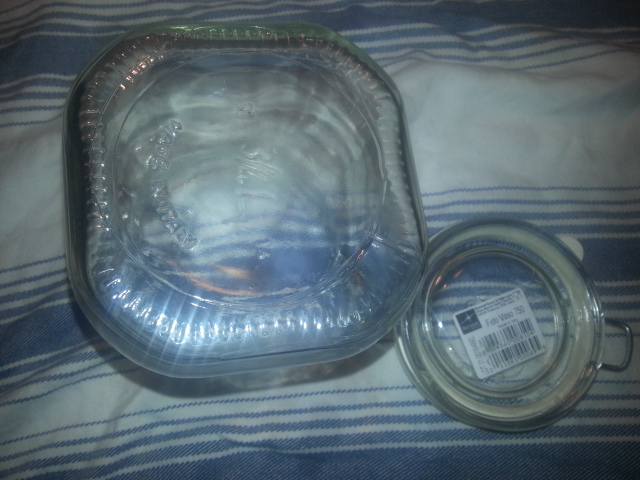
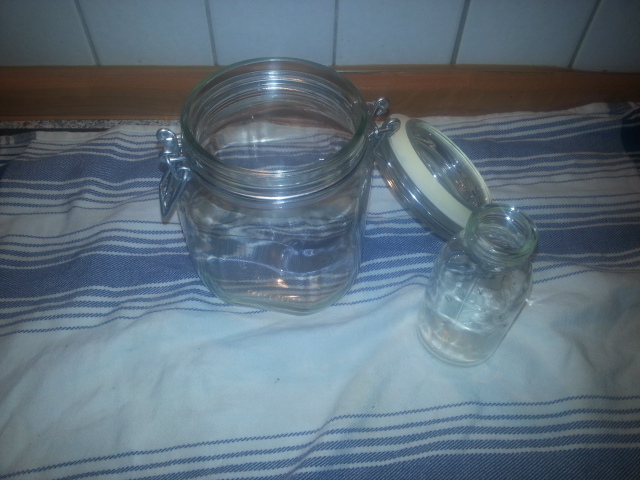
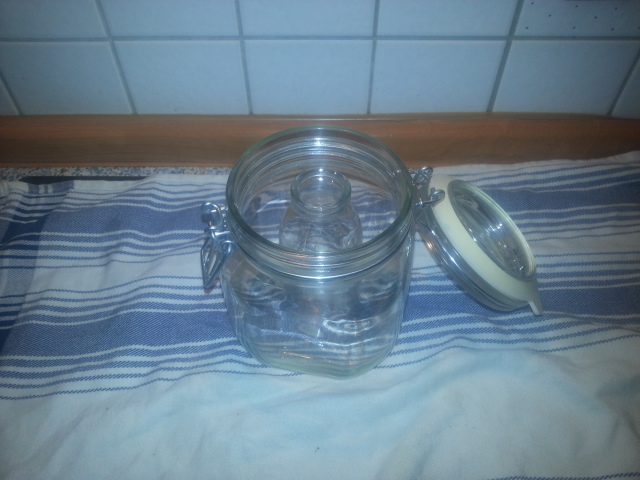
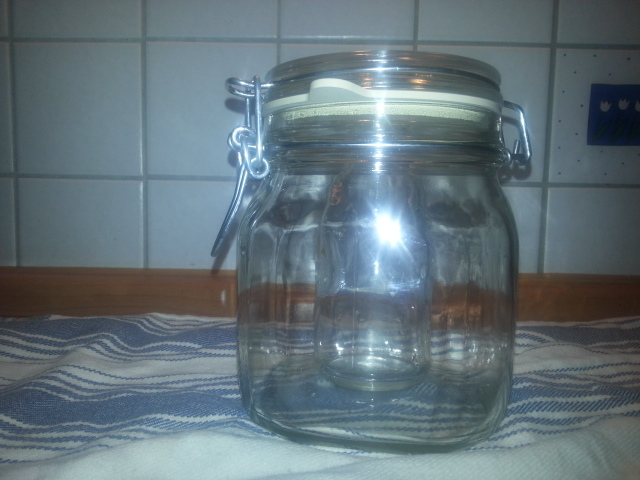
greeting
I made my first CDS yesterday and I proceeded as follows ....
I took 500ml of double distilled water (Room Temp) in a preserving jar filled with swing top (better than screw cap because everything here is made of glass).
the preserving jar had a capacity exceeding 3/4 liter.
I took 25ml of NACLO2 and 25ml of HCL with 5% concentration
12h oxidation at room temperature (21 degree celsius)
and then going on for more 12h oxidation in a fride.
After exactly 24 hr production time, I ended and decanted the CDS in 2x250ml amber glass bottles ....
I can´t say which concentraition I have fabricated.....I have the opportunity that my girlfriend who works in the laboratory to measure the exact ppm concentrations ....
as soon as she has ascertained a value I will posted it here....
greeting
The following user(s) said Thank You: fourfingerz, JB13
Please Log in or Create an account to join the conversation.
- macedonian
-
- Offline
- User is blocked
-
Less
More
- Posts: 7
- Thank you received: 2
23 May 2013 21:37 #33344
by macedonian
Replied by macedonian on topic CDS
here is the result....
it was taken 1ml of CDS and diluted with 1L water.
The photometer has a value determined by 1.4 mg per liter (see pictures)
I'm now quite in the assumption that my CDS has a value of 1400 ppm, am I right ?
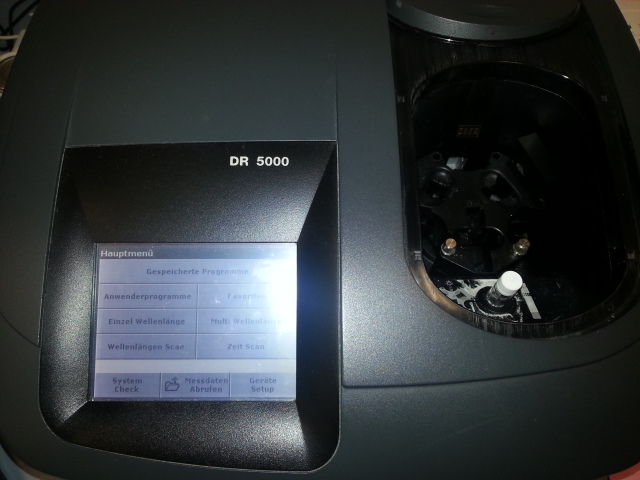
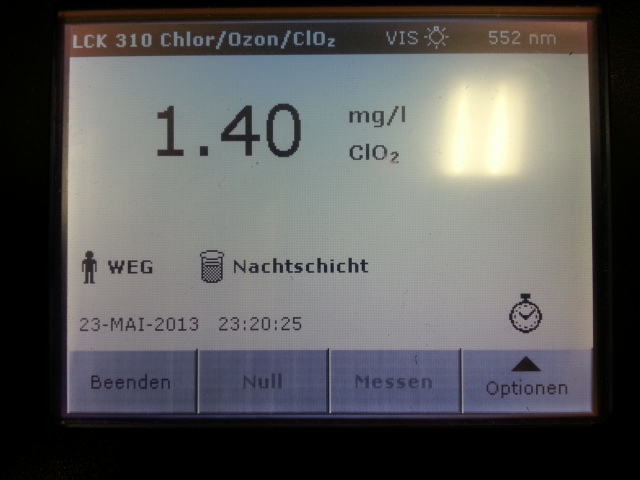
it was taken 1ml of CDS and diluted with 1L water.
The photometer has a value determined by 1.4 mg per liter (see pictures)
I'm now quite in the assumption that my CDS has a value of 1400 ppm, am I right ?
Time to create page: 0.420 seconds
The MMS HEALTH RECOVERY GUIDEBOOK is Jim’s latest book. It provides the latest information on how to safely use MMS. Click the book image to order your copy today.
Jim's Blog
-
Unpleasant Symptoms, Biofilms, Going Too Fast
Published on: October 14, 2026
Note: In a health context, a biofilm is a structured, highly organized community of microorganisms (such as bacteria or fungi) that adheres to a surface and is encased within a self-produced, sticky, gel-like matrix of proteins, DNA, and sugars. Instead of floating freely as individual cells, the microbes (bad stuff) physically cluster together to form …
-
Cravings/Weight Management/Blocked Veins
Published on: October 4, 2026
A conversation with Jim in 2010: D: Some doctors have told me that harmful pathogens have the ability to manipulate the brain chemistry to make you crave the things they want to eat. Since I have been on MMS/CD, I have lost all cravings. I have also lost 60 pounds (which I needed to lose), …
-
Flu Season
Published on: September 28, 2026
The flu is a lot more dangerous sometimes than people realize and flu can make you very, very sick. There are some flu’s today that are highly resistant to most everything. So with flu and colds that just won’t go away and with pneumonia, here is another suggested approach you can try if the standard …
-
Making Health Decisions
Published on: September 22, 2026
Following is Jim’s answer to someone who was struggling with trying to get a loved one to follow certain procedures regarding their health: Jim: It is important to understand, that what a person decides to do about their own health is a very personal matter. In addition, there are so many factors involved in making …
-
MMS/CD and Antioxidants
Published on: September 14, 2026
Some folks get confused and a bit hung up on the issue of MMS/CD and antioxidants. While it is true, we have said and many others emphasize, you cannot take MMS/CD with antioxidants. Fair enough, it stands to reason that taking antioxidants with an oxidizer is not the best thing to do. BUT, you have …
-
Why it’s Not Working
Published on: September 2, 2026
From a discussion with Jim on why MMS/CD doesn’t seem to be working: Jim: If it’s not working, do something different. But this can be tricky, you have to give each thing enough time to work, don’t be rash, but don’t stay stuck either, this is where listening to your body comes in and the …