
- Posts: 11
- Thank you received: 1
 Confused by AMS instructions from Laube Holistic Health
- Tammytickle
-
 Topic Author
- Offline
- New Member
-

Less
More
09 Mar 2018 22:06 #57867
by Tammytickle
Confused by AMS instructions from Laube Holistic Health was created by Tammytickle
Hi,
I’m really confused by instructions on bottles of AMS and the Activator. It suggests just one stop in 3.5 litres? Yet in his video he suggests the 1 drop to 5 drops activation.
The Activator is 4% and the AMS is 24%.
Any advice please?
Many thanks
I’m really confused by instructions on bottles of AMS and the Activator. It suggests just one stop in 3.5 litres? Yet in his video he suggests the 1 drop to 5 drops activation.
The Activator is 4% and the AMS is 24%.
Any advice please?
Many thanks
Please Log in or Create an account to join the conversation.
- CLO2
-

- Offline
- Administrator
-

10 Mar 2018 03:07 #57869
by CLO2
Replied by CLO2 on topic Confused by AMS instructions from Laube Holistic Health
The 1 drop in 3.5 liters of water is probably for water purifying.
One drop of "AMS" to 5 drops of 10% citric acid activator is a very old way to make MMS1.
If you have 4% HCL activator, the mix ratio is 1:1, one part "AMS" to 1 part 4% HCL. That is considered a one drop MMS1 dose.
To begin ingesting MMS, follow the Starting Procedure, then Protocol 1000, etc according to the Health Restoration Plan (HRP) found in Jim Humble's latest book.
One drop of "AMS" to 5 drops of 10% citric acid activator is a very old way to make MMS1.
If you have 4% HCL activator, the mix ratio is 1:1, one part "AMS" to 1 part 4% HCL. That is considered a one drop MMS1 dose.
To begin ingesting MMS, follow the Starting Procedure, then Protocol 1000, etc according to the Health Restoration Plan (HRP) found in Jim Humble's latest book.
Please Log in or Create an account to join the conversation.
- Tammytickle
-
Topic Author
- Offline
- New Member
-
Less
More
- Posts: 11
- Thank you received: 1
10 Mar 2018 08:13 #57870
by Tammytickle
Replied by Tammytickle on topic Confused by AMS instructions from Laube Holistic Health
Thank you for your quick reply CLO2.
Just read the protocol. Jury one other thing. The drops I have are basically straws inside the bottles. The drops that come out are minuscule. I assume the drops have to be more. Is there a specific measurement. Sorry if this is listed on any websites already.
Thank you
Just read the protocol. Jury one other thing. The drops I have are basically straws inside the bottles. The drops that come out are minuscule. I assume the drops have to be more. Is there a specific measurement. Sorry if this is listed on any websites already.
Thank you
Please Log in or Create an account to join the conversation.
- CLO2
-
- Offline
- Administrator
-
10 Mar 2018 08:56 - 10 Mar 2018 09:01 #57871
by CLO2
Replied by CLO2 on topic Confused by AMS instructions from Laube Holistic Health
Those "straws" are probably pipettes. If they are marked with calibrations lines, then you would squeeze the rubber bulb on the top and draw up some liquid into the pipettes, then dispense into a dry glass.
If there are no calibrations, then you could use a glass eye dropper to get "drops" out of the bottles.
If I had those particular bottles, I would use 1 ml syringes with calibrations printed on the barrel.
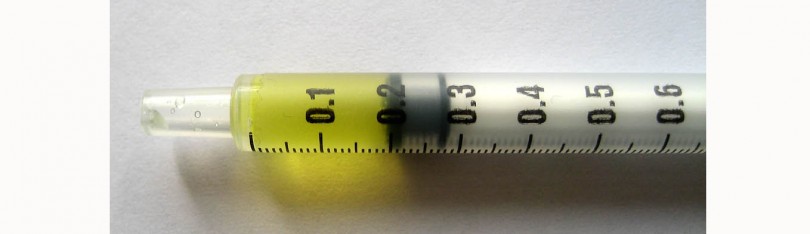
Yes, there is a standard size drop as defined by how many drops will fit in a one milliliter space. Jim Humble says there are 20 drops/ml, so that means each drop is 0.05 ml in volume. You can actually measure that when using a 1 ml syringe. Here is a 1 ml syringe with 0.20 ml of MMS1 which would be 4 drops. Two drops would be 0.10 ml and one drop would be 0.05 ml.
If there are no calibrations, then you could use a glass eye dropper to get "drops" out of the bottles.
If I had those particular bottles, I would use 1 ml syringes with calibrations printed on the barrel.
Yes, there is a standard size drop as defined by how many drops will fit in a one milliliter space. Jim Humble says there are 20 drops/ml, so that means each drop is 0.05 ml in volume. You can actually measure that when using a 1 ml syringe. Here is a 1 ml syringe with 0.20 ml of MMS1 which would be 4 drops. Two drops would be 0.10 ml and one drop would be 0.05 ml.
Last edit: 10 Mar 2018 09:01 by CLO2.
The following user(s) said Thank You: Marshall
Please Log in or Create an account to join the conversation.
- Tammytickle
-
Topic Author
- Offline
- New Member
-
Less
More
- Posts: 11
- Thank you received: 1
11 Mar 2018 13:57 #57893
by Tammytickle
Replied by Tammytickle on topic Confused by AMS instructions from Laube Holistic Health
Thank you again CLO2, you have been so helpful.
If I may ask one other question regarding the protocol as there seems to be a lot of conflicting suggestions.
The protocol for MMS1 involves adding one drop each (which I am doing 4 little drops of each) into a jug of water, to drink only 90ml and throw rest away. This seems really odd and makes no logical sense to me?
In many videos Jim himself just adds a couple of drops each adds a little water or juice and drinks!
Working with clients all day I’m going to miss the hourly dose, any suggestions would be great and if it can pre-made.
Also interested DMSO, a little lost as to what the difference is... I will be reading up as much as I can....
Thank you
If I may ask one other question regarding the protocol as there seems to be a lot of conflicting suggestions.
The protocol for MMS1 involves adding one drop each (which I am doing 4 little drops of each) into a jug of water, to drink only 90ml and throw rest away. This seems really odd and makes no logical sense to me?
In many videos Jim himself just adds a couple of drops each adds a little water or juice and drinks!
Working with clients all day I’m going to miss the hourly dose, any suggestions would be great and if it can pre-made.
Also interested DMSO, a little lost as to what the difference is... I will be reading up as much as I can....
Thank you
Please Log in or Create an account to join the conversation.
- CLO2
-
- Offline
- Administrator
-
11 Mar 2018 23:21 - 11 Mar 2018 23:26 #57905
by CLO2
Replied by CLO2 on topic Confused by AMS instructions from Laube Holistic Health
The Starting Protocol lasts for 5 days and is designed to get you started taking MMS1 internally. Day 1 has you take only a 1/4 drop dose of MMS1, days 2 & 3 one half drop, day 4 three quarters drop dose and day 5, 1 full drop dose of MMS1, which is also the starting dose when following Protocol 1000.
A way to do that is to make a 120 ml (4 fl oz) water solution with one drop of MMS added. If you ingested that, you would be taking a one drop dose of MMS1. So, to reduce the one drop dose to one fourth (1/4) drop dose you will need to discard 3/4 of the 4 fluid ounce MMS1 water solution leaving 1/4 of it or a 1/4 drop dose. Add more water to the remaining 1 fl oz if needed.
You can make an all-day bottle of MMS1 to take to work with you. On page 36 of Jim's latest book, the process is described.
If you follow Protocol 1000 Plus, you will be adding DMSO drops to each MMS1 hourly dose. Buy the most pure DMSO you can find for a better taste and a no body odor experience.
A way to do that is to make a 120 ml (4 fl oz) water solution with one drop of MMS added. If you ingested that, you would be taking a one drop dose of MMS1. So, to reduce the one drop dose to one fourth (1/4) drop dose you will need to discard 3/4 of the 4 fluid ounce MMS1 water solution leaving 1/4 of it or a 1/4 drop dose. Add more water to the remaining 1 fl oz if needed.
You can make an all-day bottle of MMS1 to take to work with you. On page 36 of Jim's latest book, the process is described.
If you follow Protocol 1000 Plus, you will be adding DMSO drops to each MMS1 hourly dose. Buy the most pure DMSO you can find for a better taste and a no body odor experience.
Last edit: 11 Mar 2018 23:26 by CLO2.
Please Log in or Create an account to join the conversation.
Time to create page: 0.229 seconds
The MMS HEALTH RECOVERY GUIDEBOOK is Jim’s latest book. It provides the latest information on how to safely use MMS. Click the book image to order your copy today.
Jim's Blog
-
Unpleasant Symptoms, Biofilms, Going Too Fast
Published on: October 14, 2026
Note: In a health context, a biofilm is a structured, highly organized community of microorganisms (such as bacteria or fungi) that adheres to a surface and is encased within a self-produced, sticky, gel-like matrix of proteins, DNA, and sugars. Instead of floating freely as individual cells, the microbes (bad stuff) physically cluster together to form …
-
Cravings/Weight Management/Blocked Veins
Published on: October 4, 2026
A conversation with Jim in 2010: D: Some doctors have told me that harmful pathogens have the ability to manipulate the brain chemistry to make you crave the things they want to eat. Since I have been on MMS/CD, I have lost all cravings. I have also lost 60 pounds (which I needed to lose), …
-
Flu Season
Published on: September 28, 2026
The flu is a lot more dangerous sometimes than people realize and flu can make you very, very sick. There are some flu’s today that are highly resistant to most everything. So with flu and colds that just won’t go away and with pneumonia, here is another suggested approach you can try if the standard …
-
Making Health Decisions
Published on: September 22, 2026
Following is Jim’s answer to someone who was struggling with trying to get a loved one to follow certain procedures regarding their health: Jim: It is important to understand, that what a person decides to do about their own health is a very personal matter. In addition, there are so many factors involved in making …
-
MMS/CD and Antioxidants
Published on: September 14, 2026
Some folks get confused and a bit hung up on the issue of MMS/CD and antioxidants. While it is true, we have said and many others emphasize, you cannot take MMS/CD with antioxidants. Fair enough, it stands to reason that taking antioxidants with an oxidizer is not the best thing to do. BUT, you have …
-
Why it’s Not Working
Published on: September 2, 2026
From a discussion with Jim on why MMS/CD doesn’t seem to be working: Jim: If it’s not working, do something different. But this can be tricky, you have to give each thing enough time to work, don’t be rash, but don’t stay stuck either, this is where listening to your body comes in and the …