
- Posts: 36
- Thank you received: 77
 Recent Progress Toward Hydrogen Medicine:
- Tomas
-
 Topic Author
- Offline
- Junior Member
-

Less
More
25 Mar 2013 20:24 #32036
by Tomas
Recent Progress Toward Hydrogen Medicine: was created by Tomas
Potential of Molecular Hydrogen for Preventive and Therapeutic Applications
Shigeo Ohta: Current Pharmaceutical Design, 2011, 17, 2241-2252
Abstract: Persistent oxidative stress is one of the major causes of most lifestyle-related diseases, cancer and the aging process. Acute oxidative stress directly causes serious damage to tissues. Despite the clinical importance of oxidative damage, antioxidants have been of limited therapeutic success. We have proposed that molecular hydrogen (H2) has potential as a “novel” antioxidant in preventive and therapeutic applications [Ohsawa et al., Nat Med. 2007: 13; 688-94]. H2 has a number of advantages as a potential antioxidant: H2 rapidly diffuses into tissues and cells, and it is mild enough neither to disturb metabolic redox reactions nor to affect reactive oxygen species
(ROS) that function in cell signaling, thereby, there should be little adverse effects of consuming H2. There are several methods to ingest or consume H2, including inhaling hydrogen gas, drinking H2-dissolved water (hydrogen water), taking a hydrogen bath, injecting H2-dissolved saline (hydrogen saline), dropping hydrogen saline onto the eye, and increasing the production of intestinal H2 by bacteria. Since the publication of the first H2 paper in Nature Medicine in 2007, the biological effects of H2 have been confirmed by the publication of more than 38 diseases, physiological states and clinical tests in leading biological/medical journals, and several groups have started clinical examinations. Moreover, H2 shows not only effects against oxidative stress, but also various anti-inflammatory and antiallergic effects. H2 regulates various gene expressions and protein-phosphorylations, though the molecular mechanisms underlying the
marked effects of very small amounts of H2 remain elusive.
Shigeo Ohta: Current Pharmaceutical Design, 2011, 17, 2241-2252
Abstract: Persistent oxidative stress is one of the major causes of most lifestyle-related diseases, cancer and the aging process. Acute oxidative stress directly causes serious damage to tissues. Despite the clinical importance of oxidative damage, antioxidants have been of limited therapeutic success. We have proposed that molecular hydrogen (H2) has potential as a “novel” antioxidant in preventive and therapeutic applications [Ohsawa et al., Nat Med. 2007: 13; 688-94]. H2 has a number of advantages as a potential antioxidant: H2 rapidly diffuses into tissues and cells, and it is mild enough neither to disturb metabolic redox reactions nor to affect reactive oxygen species
(ROS) that function in cell signaling, thereby, there should be little adverse effects of consuming H2. There are several methods to ingest or consume H2, including inhaling hydrogen gas, drinking H2-dissolved water (hydrogen water), taking a hydrogen bath, injecting H2-dissolved saline (hydrogen saline), dropping hydrogen saline onto the eye, and increasing the production of intestinal H2 by bacteria. Since the publication of the first H2 paper in Nature Medicine in 2007, the biological effects of H2 have been confirmed by the publication of more than 38 diseases, physiological states and clinical tests in leading biological/medical journals, and several groups have started clinical examinations. Moreover, H2 shows not only effects against oxidative stress, but also various anti-inflammatory and antiallergic effects. H2 regulates various gene expressions and protein-phosphorylations, though the molecular mechanisms underlying the
marked effects of very small amounts of H2 remain elusive.
Time to create page: 0.250 seconds
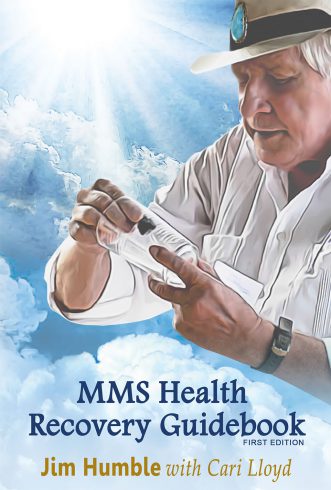
The MMS HEALTH RECOVERY GUIDEBOOK is Jim’s latest book. It provides the latest information on how to safely use MMS. Click the book image to order your copy today.
Jim's Blog
-
Unpleasant Symptoms, Biofilms, Going Too Fast
Published on: October 14, 2026
Note: In a health context, a biofilm is a structured, highly organized community of microorganisms (such as bacteria or fungi) that adheres to a surface and is encased within a self-produced, sticky, gel-like matrix of proteins, DNA, and sugars. Instead of floating freely as individual cells, the microbes (bad stuff) physically cluster together to form …
-
Cravings/Weight Management/Blocked Veins
Published on: October 4, 2026
A conversation with Jim in 2010: D: Some doctors have told me that harmful pathogens have the ability to manipulate the brain chemistry to make you crave the things they want to eat. Since I have been on MMS/CD, I have lost all cravings. I have also lost 60 pounds (which I needed to lose), …
-
Flu Season
Published on: September 28, 2026
The flu is a lot more dangerous sometimes than people realize and flu can make you very, very sick. There are some flu’s today that are highly resistant to most everything. So with flu and colds that just won’t go away and with pneumonia, here is another suggested approach you can try if the standard …
-
Making Health Decisions
Published on: September 22, 2026
Following is Jim’s answer to someone who was struggling with trying to get a loved one to follow certain procedures regarding their health: Jim: It is important to understand, that what a person decides to do about their own health is a very personal matter. In addition, there are so many factors involved in making …
-
MMS/CD and Antioxidants
Published on: September 14, 2026
Some folks get confused and a bit hung up on the issue of MMS/CD and antioxidants. While it is true, we have said and many others emphasize, you cannot take MMS/CD with antioxidants. Fair enough, it stands to reason that taking antioxidants with an oxidizer is not the best thing to do. BUT, you have …
-
Why it’s Not Working
Published on: September 2, 2026
From a discussion with Jim on why MMS/CD doesn’t seem to be working: Jim: If it’s not working, do something different. But this can be tricky, you have to give each thing enough time to work, don’t be rash, but don’t stay stuck either, this is where listening to your body comes in and the …